
Open caption are now one of the most powerful tools in modern video content creation.
In 2026, platforms like TikTok, Instagram Reels, and YouTube Shorts are driven by silent autoplay, meaning most users watch videos without sound.
Open captions solve this problem by displaying text directly on the video so viewers can understand the message instantly.
Unlike closed captions, open captions cannot be turned off, making them permanently visible and highly effective for engagement.
Creators, influencers, and brands use them to improve watch time, accessibility, storytelling, and viral potential.
This guide explains everything about open captions, including meaning, how they work, benefits, trends, tools, and strategies for growth in today’s digital world.
What Open Captions Are
- 📺 Text permanently displayed on video content
- 🔥 Cannot be turned off by viewers
- 📱 Embedded during video editing process
- 🎬 Common in short-form video platforms
- 💬 Always visible on every device
- 🌈 Helps viewers understand content without sound
- ✨ Used for storytelling and engagement
- 📸 Designed for mobile-first audiences
- 💖 Improves accessibility for hearing-impaired users
- ⚡ Works in silent autoplay feeds
- 🧠 Enhances clarity of spoken content
- 🚀 Increases viewer retention naturally
- 🌟 Often styled for visual appeal
- ☁️ Used in viral video strategies
- 🗣️ Helps global audiences understand content
- 🎯 Improves message delivery instantly
- 💅 Used in branding and marketing
- 📈 Boosts content comprehension
- 🎥 Standard in modern video editing
- 🛍️ Used in product promotion videos
- 🏆 Essential in 2026 content creation
How Open Captions Work
- 🎬 Added during video editing stage
- 📱 Burned directly into final video file
- 🔥 Cannot be edited after export
- 💻 Created using editing apps and software
- 🧠 Synced with speech and audio
- ✨ Designed for precise timing
- 📸 Placed creatively on screen
- 💖 Styled with fonts and colors
- ⚡ Exported as complete video version
- 🌈 Works on all platforms automatically
- 🎯 No user control required
- 🗣️ Always visible in mute mode
- 🚀 Improves engagement instantly
- 🌟 Common in short-form content
- ☁️ Can include emojis and effects
- 💅 Part of visual storytelling
- 📈 Increases audience retention
- 🎥 Used in ads and campaigns
- 🛍️ Helps explain products clearly
- 🧸 Supports emotional storytelling
- 🏆 Core editing step for creators
Why Open Captions Are Trending in 2026
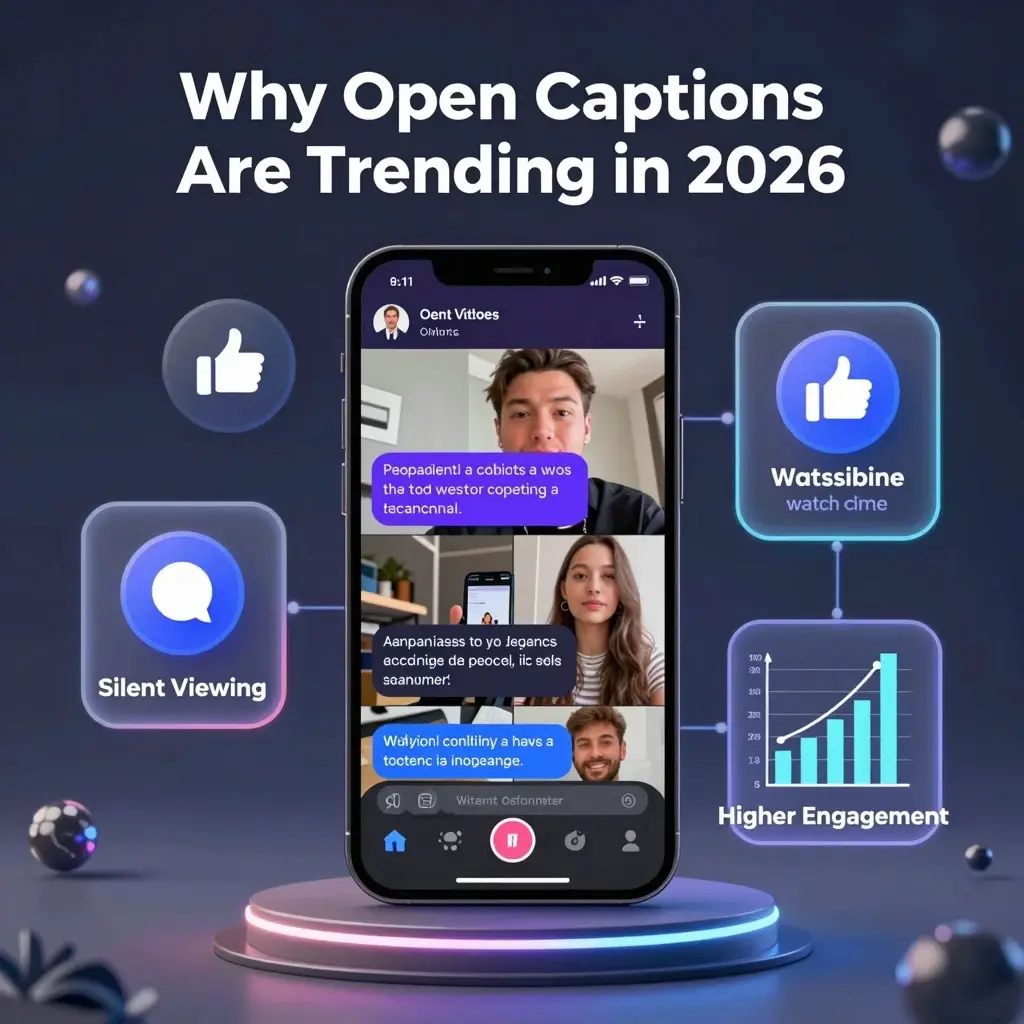
- 📱 Most users scroll without sound
- 🔥 Silent autoplay dominates feeds
- 🎬 Short attention spans require fast clarity
- 💬 Captions improve instant understanding
- 🌈 Algorithms reward high retention
- ✨ Visual storytelling is essential now
- 📸 Mobile-first usage is standard
- 💖 Accessibility awareness is growing
- ⚡ Short-form video dominates platforms
- 🧠 AI tools simplify caption creation
- 🚀 Viral videos use bold captions
- 🌟 Brands rely on fast messaging
- ☁️ Users prefer readable content
- 🗣️ Global audiences need clarity
- 🎯 Engagement depends on comprehension
- 💅 Aesthetic captions increase shares
- 📈 Improves watch time significantly
- 🎥 Supports storytelling efficiency
- 🛍️ Improves marketing conversion
- 🧸 Emotional content performs better
- 🏆 Industry standard in 2026
Benefits of Open Captions
- 📱 Works even when sound is off
- 🔥 Increases watch time
- 🎬 Improves storytelling clarity
- 💬 Boosts engagement rates
- 🌈 Expands global reach
- ✨ Improves accessibility
- 📸 Makes content more engaging
- 💖 Enhances emotional connection
- ⚡ Boosts algorithm performance
- 🧠 Reduces misunderstanding
- 🚀 Improves retention
- 🌟 Strengthens branding
- ☁️ Matches modern viewing habits
- 🗣️ Helps hearing-impaired users
- 🎯 Works across all platforms
- 💅 Improves visual appeal
- 📈 Increases shares and saves
- 🎥 Improves ad performance
- 🛍️ Enhances product messaging
- 🧸 Builds audience trust
- 🏆 Essential for growth
Open Captions vs Closed Captions
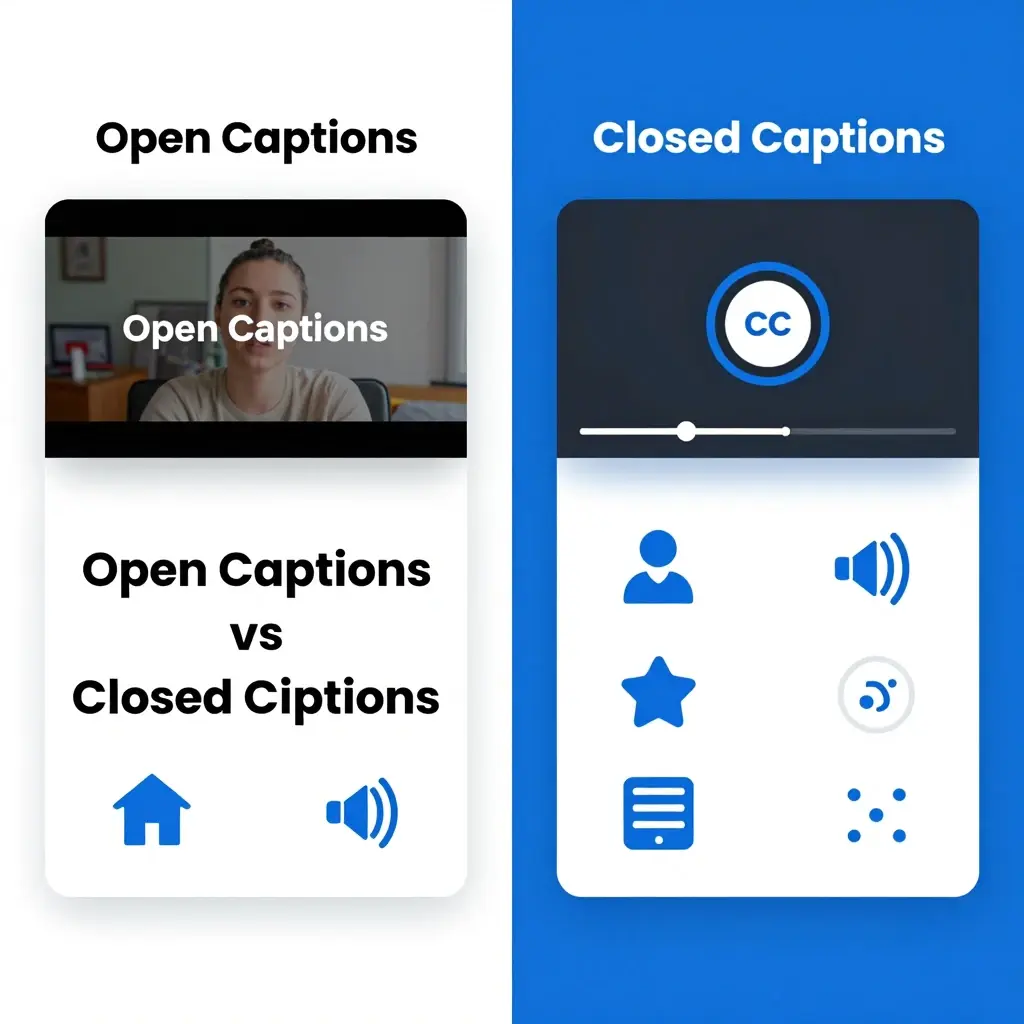
- 📺 Open captions cannot be turned off
- 🔥 Closed captions can be toggled
- 🎬 Open captions are burned into video
- 💬 Closed captions are separate files
- 📱 Open captions used in social media
- 🖥️ Closed captions used in streaming
- 🌈 Open captions focus on design
- ✨ Closed captions focus on accessibility
- 📸 Open captions boost engagement
- 💖 Closed captions give user control
- ⚡ Open captions improve retention
- 🧠 Closed captions improve comprehension
- 🚀 Open captions fit short videos
- 🌟 Closed captions fit long videos
- ☁️ Open captions always visible
- 🗣️ Closed captions optional
- 🎯 Open captions creator-controlled
- 💅 Closed captions viewer-controlled
- 📈 Both improve accessibility
- 🎥 Both improve quality
- 🏆 Both are important
Where Open Captions Are Used
- 📱 TikTok videos
- 🔥 Instagram Reels
- 🎬 YouTube Shorts
- 💬 Social media ads
- 🌈 Influencer content
- 📸 Product demos
- 💖 Storytelling reels
- ⚡ Viral memes
- 🧠 Educational videos
- 🚀 Marketing campaigns
- 🌟 Music lyric videos
- ☁️ Motivational clips
- 🗣️ Podcast highlights
- 🎯 E-commerce ads
- 💅 Fashion videos
- 📈 Fitness content
- 🎥 Travel reels
- 🛍️ Brand promotions
- 🧸 Lifestyle videos
- 🌸 Personal branding
- 🏆 Viral content
Open Caption Design Trends 2026
- 🎨 Neon glowing text
- 🔥 Animated kinetic typography
- 📱 Minimal aesthetic fonts
- 🌈 Gradient captions
- ✨ Soft pastel designs
- 📸 Center-screen placement
- 💖 Emoji-enhanced text
- ⚡ Fast-cut synced captions
- 🧠 AI-generated styling
- 🚀 Brand-colored overlays
- 🌟 Cinematic subtitle style
- ☁️ Floating text effects
- 🗣️ Highlighted keywords
- 🎯 Bold readable fonts
- 💅 Luxury typography style
- 📈 High contrast visuals
- 🎥 Movie-style subtitles
- 🛍️ Product-focused layouts
- 🧸 Cute handwritten fonts
- 🌸 Soft romantic effects
- 🏆 Viral-ready formats
Open Captions for Social Media Growth
- 📱 Improves TikTok algorithm ranking
- 🔥 Boosts Instagram engagement
- 🎬 Increases watch completion rate
- 💬 Encourages comments
- 🌈 Improves clarity
- ✨ Strengthens branding
- 📸 Enhances storytelling
- 💖 Builds emotional connection
- ⚡ Increases discoverability
- 🧠 Supports SEO
- 🚀 Helps videos go viral
- 🌟 Boosts follower growth
- ☁️ Improves mobile viewing
- 🗣️ Enhances communication
- 🎯 Increases retention
- 💅 Improves professionalism
- 📈 Strengthens marketing
- 🎥 Boosts ad performance
- 🛍️ Helps product understanding
- 🧸 Builds trust
- 🏆 Essential for creators
Best Tools for Open Captions
- 📱 CapCut editor
- 🔥 Adobe Premiere Pro
- 🎬 Canva video tool
- 💻 VEED.io platform
- 🧠 AI caption tools
- 📸 Instagram editor
- 💖 TikTok auto captions
- ⚡ Submagic AI
- 🌟 Descript editor
- ☁️ InShot app
- 🗣️ YouTube Studio
- 🎯 Clipchamp editor
- 💅 VN Video Editor
- 📈 Auto subtitle tools
- 🎥 Filmora software
- 🛍️ Marketing tools
- 🧸 Mobile editors
- 🌸 Scheduling tools
- 🚀 Cloud editors
- 💫 Transcription AI
- 🏆 Professional suites
FAQ About Open Captions
1: What are open captions?
A: Text permanently embedded in video that cannot be turned off.
2: Why are open captions important?
A: They improve engagement, clarity, and accessibility.
3: Are open captions better than subtitles?
A: They are better for social media but less flexible.
4: Can open captions be removed?
A: No, they are permanently burned into video.
5: Do open captions help SEO?
A: Yes, they improve engagement signals.
6: Where are they most used?
A: TikTok, Instagram Reels, YouTube Shorts.
Conclusion:
Open captions have become essential in 2026 because they match how people consume content today: fast, silent, and mobile-first.
They improve engagement, accessibility, and storytelling while helping creators reach larger audiences.
If you are a beginner or a brand, using open captions can significantly improve your content performance and viral potential.
In today’s digital world, open captions are not just a feature; they are a growth strategy.

His wisdom shapes captions that reflect self-belief, growth, and strong personal expression.